For decades, Detroit was synonymous with hardware—steel, engines, and the assembly line. Today, the narrative is shifting rapidly as the Motor City redefines itself as a hub for mobility and innovation. As the automotive industry pivots toward electrification and autonomous driving, the demand for tech talent in Detroit has reached critical mass, sparking a city-wide effort to attract and retain the next generation of software developers.
Major automakers, burgeoning startups, and city officials are now aligned in a strategic push to position Detroit not just as a manufacturing capital, but as a legitimate competitor to coastal tech hubs. With the recent opening of the Michigan Central innovation district and a growing ecosystem of venture-backed startups, Detroit is making a compelling case to coding talent looking for purpose-driven work and a high quality of life.
The Shift from Horsepower to Computing Power
The driving force behind this talent acquisition surge is the fundamental change in how vehicles are built. According to data from the Detroit Regional Chamber’s MichAuto program, modern vehicles are essentially computers on wheels, requiring millions of lines of code to function. This has forced companies like Ford and General Motors to compete directly with Silicon Valley giants for software engineering talent.
“The war for talent is no longer just local; it is global,” said a spokesperson for a Detroit-based mobility startup during a recent workforce development panel. “We aren’t just looking for mechanical engineers anymore. We need full-stack developers, data scientists, and UX designers who understand the intersection of physical and digital infrastructure.”
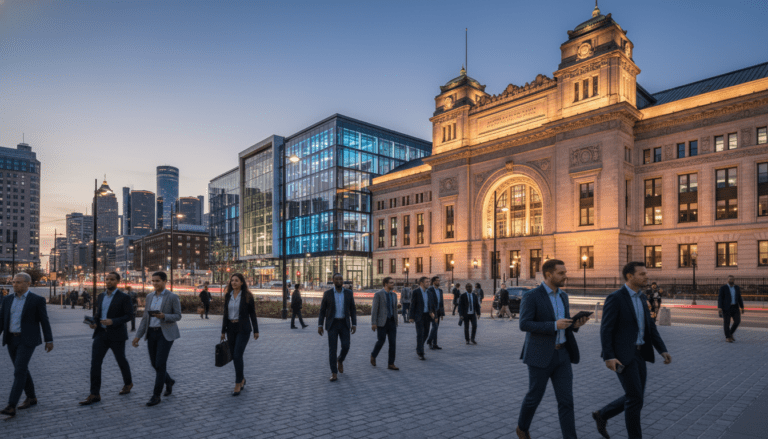
This shift is evidenced by the massive investment in the Corktown neighborhood. Ford’s restoration of Michigan Central Station serves as the anchor for a 30-acre mobility innovation district. The campus is designed specifically to bring together software developers, entrepreneurs, and established tech companies to solve urban transportation challenges. For software engineers, the appeal is the opportunity to work on tangible technology that impacts physical space, rather than just digital ad-tech or social media algorithms.
Educational Pipelines and Local Training
Attracting talent is only one side of the equation; growing it locally is the other. Institutions like Wayne State University and the University of Michigan are playing pivotal roles in feeding the pipeline for tech talent in Detroit. Furthermore, alternative education models are gaining traction.
Local coding bootcamps, such as Grand Circus, have spent years retraining Detroiters from non-technical backgrounds to enter the software field. These programs are essential for ensuring that the tech boom is inclusive. According to the Workforce Intelligence Network for Southeast Michigan, demand for IT professionals in the region has remained resilient, even amidst broader economic fluctuations.
City officials have emphasized that connecting local residents to these high-paying opportunities is a priority. Initiatives like Detroit at Work are increasingly focusing on digital literacy and technical certifications to ensure long-term residents can participate in the city’s changing economy.
Impact on Detroit Residents and Economy
The influx of software developers and the growth of the tech sector have profound implications for the local economy. Software development jobs typically offer salaries significantly higher than the regional median income. As these high-earners settle in the city, the ripple effects are felt in the local housing market and small business ecosystem.
However, this growth brings complex challenges. As reported in our coverage of Midtown real estate trends, rising wages in the tech sector can contribute to increased housing costs, raising concerns about gentrification. Community leaders are urging a balanced approach, advocating for policies that encourage development without displacing long-term residents.
Despite these concerns, the economic benefits are tangible. New residents working in tech support local restaurants, retail shops, and service providers. A study by the Bay Area Council Economic Institute suggests that for every one high-tech job created, approximately four additional jobs are created in the local goods and services sector. For Detroit, a city focused on revitalization, this multiplier effect is a crucial component of economic recovery.
The Affordability Advantage
One of Detroit’s strongest selling points for software developers is the cost of living. While salaries in Detroit may be nominally lower than in San Francisco or New York, the purchasing power is often higher. A developer earning $100,000 in Detroit can afford a lifestyle that might require double that income in the Bay Area.
Real estate developers are capitalizing on this by renovating historic buildings into loft-style apartments and co-working spaces appealing to young professionals. The narrative of “accessible luxury” is being used to lure remote workers and transplants who are priced out of coastal markets.
“I moved here from Seattle because I wanted to buy a home, not just rent a shoebox,” said James Miller, a senior software engineer who relocated to the New Center area last year. “Detroit offers a culture and a history that you don’t get in suburban tech parks. There is a sense of building something new here.”
Challenges in Retention and Infrastructure
While recruitment is improving, retention remains a challenge. The allure of fully remote work means Detroit companies must work harder to keep their employees engaged and connected to the city. Furthermore, the city’s digital infrastructure requires continuous upgrade. Reliable, high-speed internet is a non-negotiable utility for a tech hub, and efforts to bridge the digital divide in underserved neighborhoods are ongoing.
Transit also plays a role. Tech workers, accustomed to the public transit systems of major global cities, often cite Detroit’s reliance on cars as a drawback. Improvements in the QLINE and regional transit plans are often discussed as necessary steps to support a density of tech workers in the downtown core.
What Happens Next?
The trajectory for tech talent in Detroit appears positive, but it is not guaranteed. Success depends on the continued collaboration between the “Big Three” automakers, the city government, and educational institutions. The upcoming years will be a litmus test for the Michigan Central district—whether it can truly function as a catalyst for a broader tech ecosystem or remain an island of innovation.
As the lines between Detroit’s industrial past and its digital future blur, the city is betting that the next generation of software developers will value authenticity and opportunity over the saturated markets of the West Coast. For now, the data suggests that Detroit is increasingly showing up on the radar of tech talent nationwide.