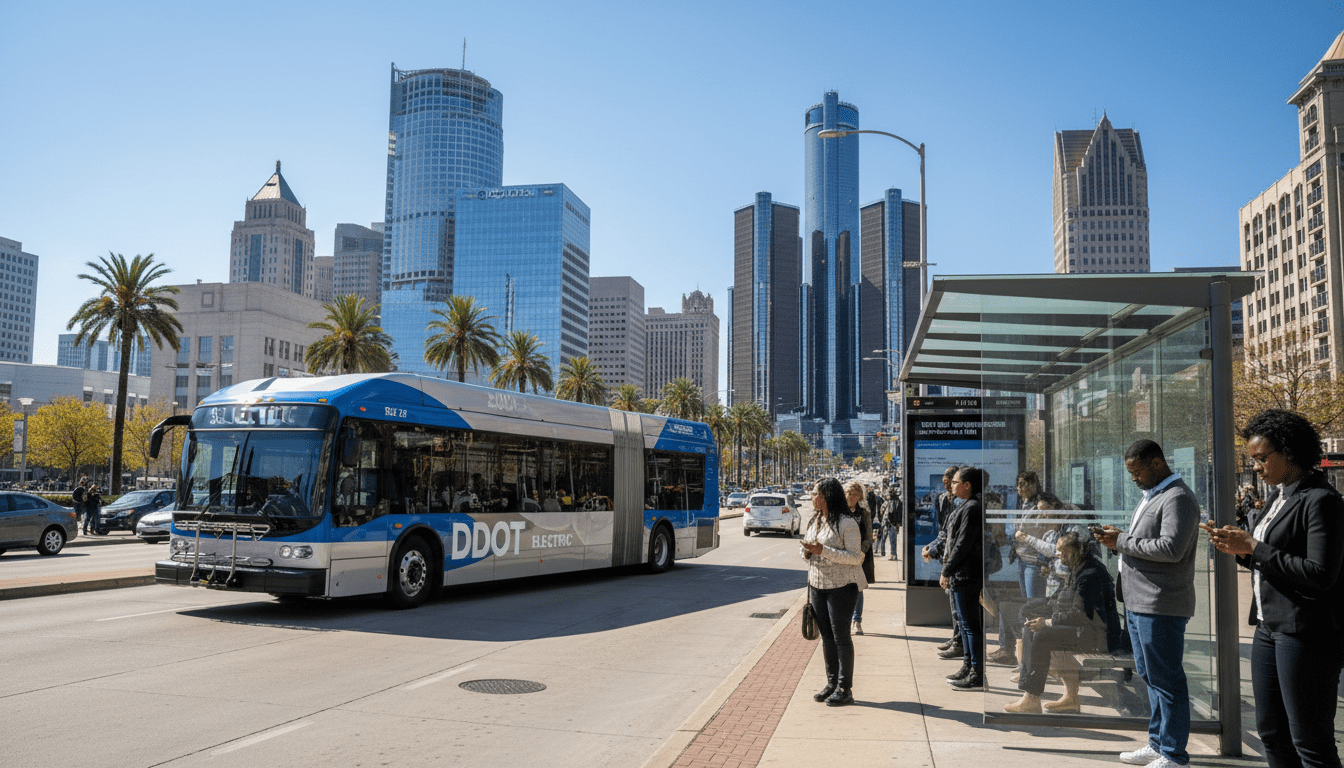
As Detroit moves further into 2026, the landscape of mobility within the Motor City is undergoing significant transformation. For decades, the reliance on personal vehicles has defined the region, but shifting demographics and a renewed focus on infrastructure have pushed Detroit public transportation into a new era of modernization. From the maturation of the "DDOT Reimagined" plan to the consolidated management of rail systems, commuters are navigating a system that is striving to become more reliable, frequent, and regionally connected.
While challenges remain regarding driver staffing and on-time performance, recent initiatives spearheaded by the Detroit Department of Transportation (DDOT) and the Regional Transit Authority of Southeast Michigan (RTA) aim to address the long-standing gaps in the city’s transit network. This report examines the current state of transit in 2026, the specific route changes affecting residents, and the broader push toward electrification.
The "DDOT Reimagined" Plan: Status in 2026
The centerpiece of the city’s current transit strategy is the full implementation of the long-term strategic plan often referred to as "DDOT Reimagined." Initiated earlier in the decade, the plan was designed to shift resources toward high-frequency routes where demand is highest, a strategy that has now reshaped the daily commute for thousands of Detroiters.
According to the City of Detroit, the primary goal for 2026 has been establishing a "frequency first" model. This involves the neighborhoods across the city seeing a distinct tiering of services:
- ConnectTen Routes: The backbone of the system (including Woodward, Gratiot, and Grand River) now targets 15-minute or better headways throughout the bulk of the day. Reliability data suggests that while peak-hour service has improved, off-peak consistency remains a focal point for improvement.
- Neighborhood Connectors: Secondary routes linking residential areas to the main corridors have seen schedule adjustments to better align with shift changes at major employment centers, including the Stellantis plants and downtown offices.
- 24-Hour Service: Expanded night service has been a critical demand from riders. In 2026, the city has maintained 24-hour operations on key arterial routes, providing essential mobility for third-shift workers.
Officials from DDOT have noted that while the route map has stabilized, the focus is now on "hardening" the schedule—ensuring that the posted times match the reality on the street, a metric that has historically frustrated riders.
RTA Leadership and the QLINE Transition
One of the most significant structural changes in Detroit public transportation over the last two years has been the shift in governance regarding the QLINE. Following the transition of the QLINE from non-profit operation to public ownership under the Regional Transit Authority (RTA), 2026 marks a period of integrated management.
This consolidation was intended to streamline funding and operations. The RTA’s involvement has allowed for better synchronization between the QLINE streetcar and the parallel DDOT and SMART bus services on Woodward Avenue. Commuters can now utilize a more seamless transfer system, reducing the friction that previously existed between the different transit modes.
"The goal is a unified network, not a patchwork of providers," said a spokesperson for the RTA in a recent press briefing. "Whether a rider is on a FAST bus from the suburbs, a DDOT local, or the QLINE, the experience needs to be cohesive."
Electrification and Infrastructure Upgrades
Sustainability continues to drive capital investments in Detroit’s fleet. Leveraging federal grants from the Federal Transit Administration (FTA), Detroit is accelerating the retirement of older diesel buses in favor of battery-electric and low-emission hybrid models.
In 2026, riders will notice smoother, quieter rides on major corridors as the percentage of electric buses in the active fleet increases. This transition also requires significant infrastructure upgrades, including charging stations at terminals and maintenance facilities.
Beyond the vehicles themselves, shelter improvements are underway. The city has prioritized installing solar-powered lighting and real-time arrival screens at high-volume stops. However, coverage remains inconsistent, with riders in outer neighborhoods still advocating for better amenities at stops that currently consist of only a signpost.
Impact on Detroit Residents and Commuters
For the average resident, these high-level policy shifts translate to practical changes in daily life. The integration of payment systems—specifically the widespread adoption of the Dart app and contactless payment methods—has simplified boarding. Riders no longer need to worry about carrying exact change or navigating different fare media for city and suburban buses.
However, the "last mile" problem persists. While the downtown core and midtown areas boast robust options, residents in areas like Brightmoor or the far East Side still face longer wait times for connector routes. This disparity impacts access to jobs and economic opportunities centered in the city’s rebounding commercial districts.
Local advocacy groups continue to push for better shelter maintenance and snow removal at bus stops during the winter months, citing accessibility issues for seniors and riders with disabilities. The city has responded by increasing the budget for stop maintenance, though the backlog of repairs remains a challenge.
Looking Ahead: The Push for Rapid Transit
Discussions regarding Bus Rapid Transit (BRT) have resurfaced in 2026 planning sessions. Unlike standard bus service, BRT would utilize dedicated lanes and signal priority to mimic the speed of rail. While no full-scale BRT line is operational yet, feasibility studies for corridors like Gratiot and Michigan Avenue are influencing current road redesign projects.
The Michigan Department of Transportation (MDOT) is working in conjunction with city planners to ensure that future road resurfacing projects do not preclude the addition of transit-only lanes. For commuters, this signals a potential future where public transit could competitively rival driving times during rush hour.
Commuter Tips for 2026
For those navigating the system this year, experts recommend the following:
- Use the Dart App: It remains the most reliable way to purchase passes valid on both DDOT and SMART.
- Check Real-Time Data: While schedules are improved, traffic and construction still cause delays. Use the Transit app or Google Maps for live tracking rather than relying solely on paper schedules.
- Plan for Transfers: With the hub-and-spoke model still dominant, many cross-town trips require a transfer downtown. Allow an extra 15 minutes for connections.
As Detroit continues to evolve, its circulatory system—public transit—is slowly catching up to the demands of a modern metropolis. While it is not yet a seamless web, the updates in 2026 reflect a city committed to moving its people more efficiently.
For more detailed schedules and maps, visit the official Detroit Department of Transportation website.